|
"The passion of my life over the last forty years has been a compelling
interest in psychedelic drugs. They have given me not only an exciting area
of research and discovery, but also a personal understanding of just who I
am and why I am."
From the Foreword to... |
|
| |
|
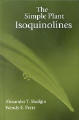
The Simple Plant Isoquinolines
by Dr. Alexander Shulgin & Wendy Perry
ISBN 0-9630096-2-1,
Description: Hardcover,
xxxvi + 624 pages. Height 23.5 cm. x width 15.8 cm. x thickness 4.5 cm.
Foreword 1
by Alexander T. Shulgin
excerpt... The passion of my life over the last forty years has been a
compelling interest in psychedelic drugs. They have given me not only an
exciting area of research and discovery, but also a personal understanding
of just who I am and why I am. Certainly these guides and sacraments will
eventually play an accepted role in our community and in our culture. Almost
all of these drugs have either been isolated from psychoactive plants, or
are the results of subtle variations of the molecular structures of these
isolates.
I
have always looked at these plants and the compounds they contain in the
same way that the Romans dreamt of their ultimate empire. It was Caesar who
acknowledged that all of Gaul was divided into three parts and to understand
it, to conquer it, each part had to be respected as a separate entity. It is
exactly the same way with understanding the world of psychedelic drugs.
There are three domains of inquiry that must be studied independently before
one can begin to appreciate just how they might integrate into a single
concept. These three are now, I believe, coming together.
One
part is the large collection of psychoactive compounds known as the
phenethylamines. The first known plant psychedelic was mescaline, or
3,4,5-trimethoxyphenethylamine. This simple one-ring alkaloid was discovered
in the North American dumpling cactus Peyote (Anhalonium williamsii)
in the late nineteenth century, and is now known to be a component of over
fifty other cacti. Over a dozen other cactus phenethylamines have been
isolated and identified, and there are perhaps a hundred synthetic analogues
that are now also known to be psychedelic in action. This body of
information has been published by my wife Ann and me as a book entitled "PIHKAL:
A Chemical Love Story." PIHKAL stands for Phenethylamines I Have Known and
Loved.
An
almost-as-large chemical group contains the tryptamines. ... Ann and I have
written a companion volume to PIHKAL called "TIHKAL: The Continuation" (TIHKAL
stands for Tryptamines I have Known and Loved), which has brought together
most of these natural and synthetic tryptamines into a single reference
site.
The
remaining third of the above Gallic synthesis deals with what I had
originally called the "Q" compounds, as distinguished from the "P" compounds
and the "T" compounds (the phenethylamines and the tryptamines). ... No
name has yet been decided upon, but ideas such as The Third Book, or Book
Three, are under consideration. Names like these resound with a rather
striking arrogance, if nothing else.
Foreword II by Wendy Perry
excerpt... As it is now, the pharmaceutical industry is bridging the
gap between what is socially and legally acceptable to do to one's brain
chemistry in order to feel well, and what is currently considered
unacceptable, which is using chemical or plant medicines to look at why one
is not feeling well to begin with.
There is great hypocrisy, fear, and thoughtlessness afoot in the United
States regarding psychoactive drugs. Their benefits and potential uses are
lost in the rhetoric of the "drug war," and in the fear that it generates.
There are many examples of healthy and informed use of psychoactive
medicines throughout the world, and throughout the ages. They have been used
in the past, and are being used today, as healing tools. We need that kind
of thinking in this country, we need that kind of healing.
Hypocrisy exists in the laws regarding alcohol and tobacco, which are legal,
and are the most damaging and widely abused drugs in our culture. Many
pharmaceutical drugs are not without their dangers and abuses as well (it's
a fact that far more Americans die from pharmaceutical drugs than illegal
drugs). What are the fears of psychoactive drugs really based on? I
encourage those who start with the arguments of brain damage caused by this
or that drug to obtain the actual scientific papers that make those claims
(not just the titles of the papers) and read them carefully. They will find
much misinformation due to political pressure, economics, and fear.
46.00
includes $6.00
shipping within USA via media mail.
Presently we do not ship outside the USA.
return to Ask Dr. Shulgin Online |